Earlier this evening I repaired a cassette tape. The repair was simple enough – the leader had broken, but enough of it was left over so that when I opened up the cassette and attached the remaining piece to the reel I’m not already into the brown magnetic portion of the tape every time I press ‘play’, but it led me to thinking about cassette tapes, CDs, mp3s, etc. The benefits of technology, etc. Because although I’ve repaired several tapes, I’ve never yet had to repair a CD. Not that I’d know how, aside from the polishers that I’ve seen for sale. And to repair an mp3? Forget it.
There is a connection here to the difficulty that the medical community presently has with death, though for the moment I forget what it is (I placed the newspaper article down on the computer before I left earlier, since I saw the connection, but now that I’ve returned to the keyboard the thought has flown). And by problem with death, I don’t mean delaying death; I mean deciding when to declare it.
100 years ago, when you were dead, you were dead. No pulse? That’s it; send for the grave-diggers. But then we began to parse death. What do we do with someone who continues to have a pulse, but is irresponsive to all stimuli? Is this person alive? Technology advanced, and things only got messier. Heart-lung machines enable the body, and sometimes the mind to survive periods of death. Heart transplants involved patients living without hearts in their bodies at all, albeit only for the period between when their own heart was removed and the donor heart installed. CPR confused matters as well, as did defibrillation, with their abilities to return a nonbeating heart to proper order.
At the same time, we plunged further into the brain, developing EEGs and debating over the meaning of “brain death”. Some of you will remember the Terri Schiavo case of 2005, which revolved on this issue, among others, but another focus of this discussion is organ donation. Organ viability rapidly declines after perfusion ceases, or even decreases below normal levels. Thus, it is in the best interest of the patient receiving the organs to declare the death of the donor earlier, rather than later. Of course, it is arguably in the best interest of the donor to declare death later, rather than earlier. The same declaration of death must be used for both contexts.
I am here reminded of sub-subatomic particles. The presence of electrons, neutrons, and protons seems obvious to anyone looking at atomic structure, but what about quarks, mesons, etc? Did these only come into being once we shattered our protons and neutrons, much as the shards of a mirror only come into being once the mirror is shattered?
Well, it's late, and I'm tired. I don't know how coherent this is, but I'm off to bed.
Source: Nano, Stephanie. “Doctors Examine When to Declare Organ Donors Dead”. p8B, The Journal News, 14 August 2008
EDIT: in an earlier version of this article it was incorrectly stated that for organ recipients, best practice was to declare the death of the donor later rather than earlier. This is incorrect: organ viability decreases as blood flow decreases, thus donated organs are healthier if harvested earlier. Some spelling errors were also made.
Showing posts with label death. Show all posts
Showing posts with label death. Show all posts
Saturday, August 16, 2008


Saturday, July 26, 2008
The spider and the bee
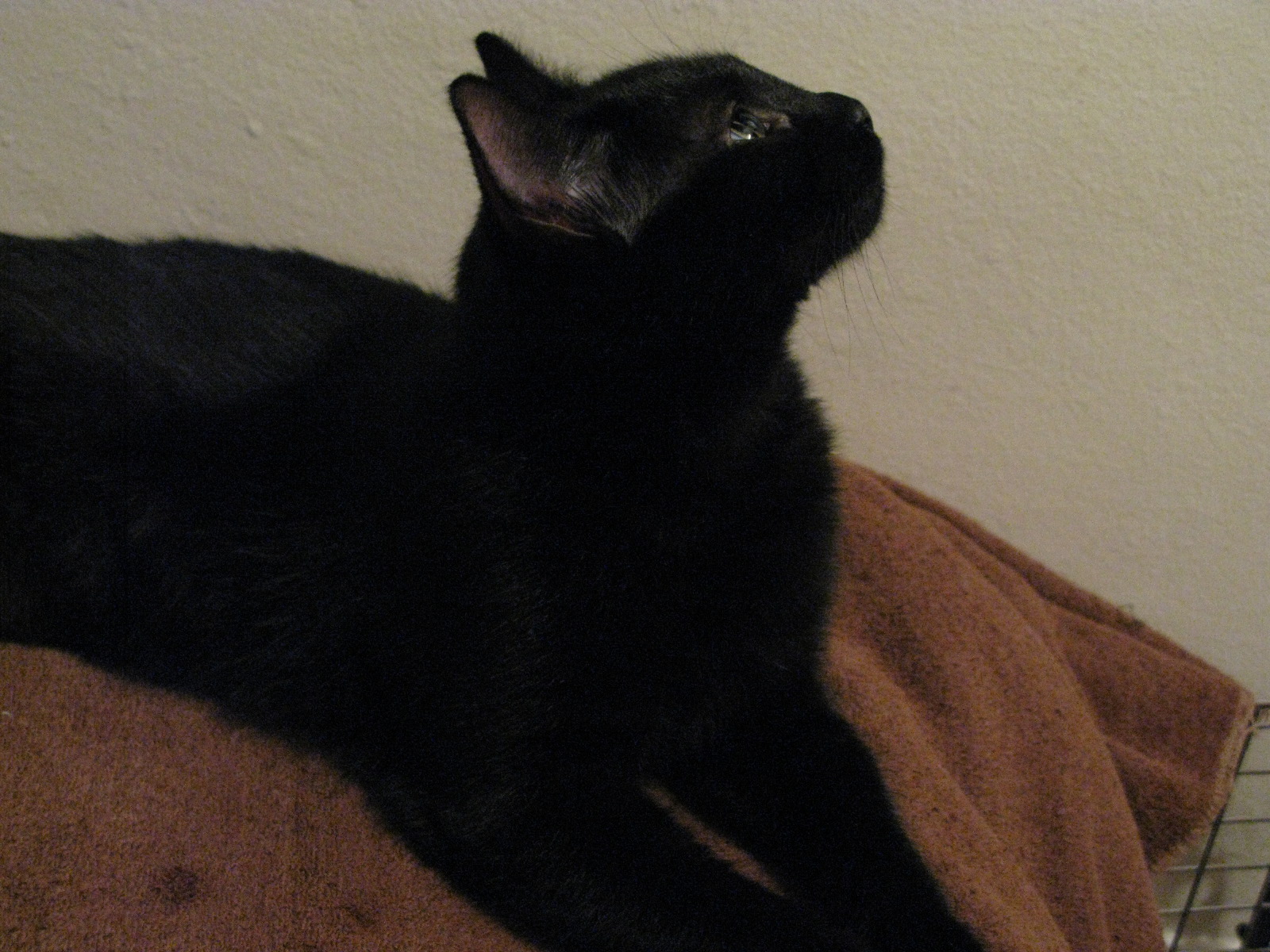
Shadow is presently fiercely watching, and occasionally trying to pounce on a bee. The bee is outside, so she can't get it, of course, otherwise I'd intervene - Shadow doesn't need to be stung on the nose or mouth. But her harmless pounces have drawn my attention to the plight of this bee, which has caught one of its legs in a spiderweb.
The bee is desperate. It alternately tries to pull itself away by walking and by flying. Neither work. The spider, from its safe location on the far side of the web, watches patiently: the bee is to strong for the moment. Some minutes or hours of struggle will wear it down, and I expect that the spider will then move in to finish the bee off.
And I am faced with a decision. It would be very easy to open the window, cut the web, and release the bee. But our interference in matters like this is rarely beneficial, except in as much as we sympathize with the bee, and feel better once we set it free, as if we've done something to make the world a better, fairer place.
We haven't, of course. We free the bee, and the spider suffers. What is more, how is it that the bee should be valued over the spider? Or the spider over the bee? Gary Larson wrote on this subject in There's a Hair in my Dirt, the story of Harriet, who loved all creatures (all cute, furry ones, at least) and did all she could for them. In each case she freed the bee, and ultimately, she makes the world a worse place for it. There is a balance between bees and spiders.
So do I give in to the emotions and free the bee, or give in to my reasoning and leave it to its death? Either way, I'm not exactly happy.
Postscript: Turns out that the bee escaped on its own, so all this was for nothing.
The bee is desperate. It alternately tries to pull itself away by walking and by flying. Neither work. The spider, from its safe location on the far side of the web, watches patiently: the bee is to strong for the moment. Some minutes or hours of struggle will wear it down, and I expect that the spider will then move in to finish the bee off.
And I am faced with a decision. It would be very easy to open the window, cut the web, and release the bee. But our interference in matters like this is rarely beneficial, except in as much as we sympathize with the bee, and feel better once we set it free, as if we've done something to make the world a better, fairer place.
We haven't, of course. We free the bee, and the spider suffers. What is more, how is it that the bee should be valued over the spider? Or the spider over the bee? Gary Larson wrote on this subject in There's a Hair in my Dirt, the story of Harriet, who loved all creatures (all cute, furry ones, at least) and did all she could for them. In each case she freed the bee, and ultimately, she makes the world a worse place for it. There is a balance between bees and spiders.
So do I give in to the emotions and free the bee, or give in to my reasoning and leave it to its death? Either way, I'm not exactly happy.
Postscript: Turns out that the bee escaped on its own, so all this was for nothing.
Subscribe to:
Posts (Atom)